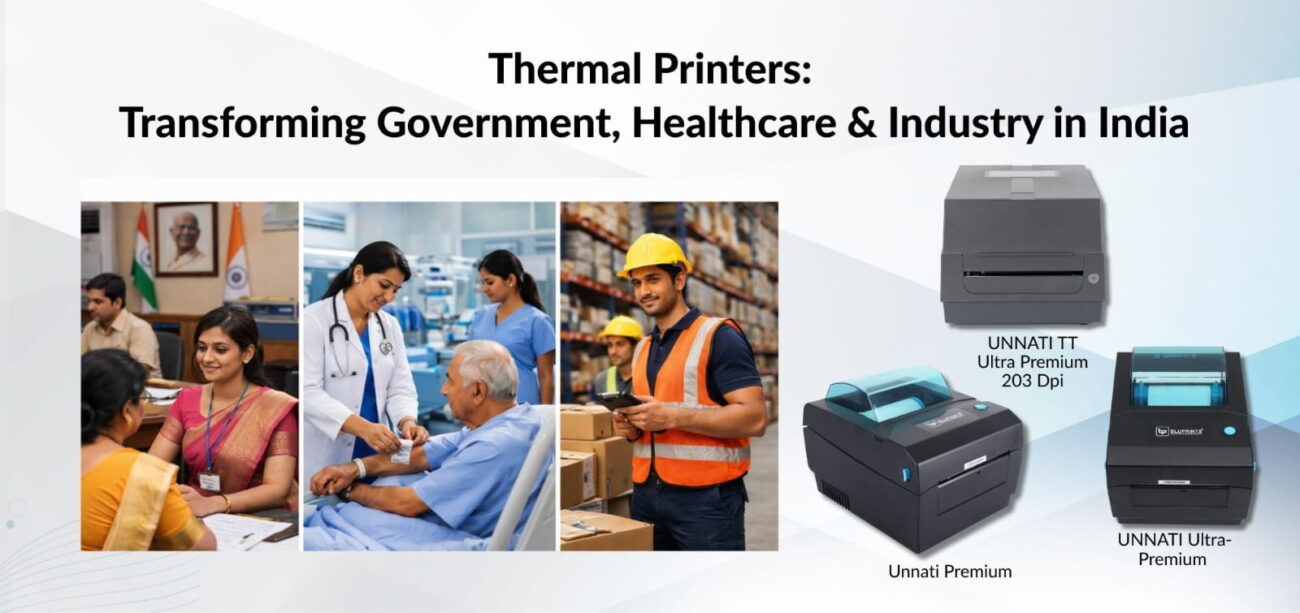
How Thermal Label Printers Are Transforming Government, Healthcare, and High-Volume Industries in India
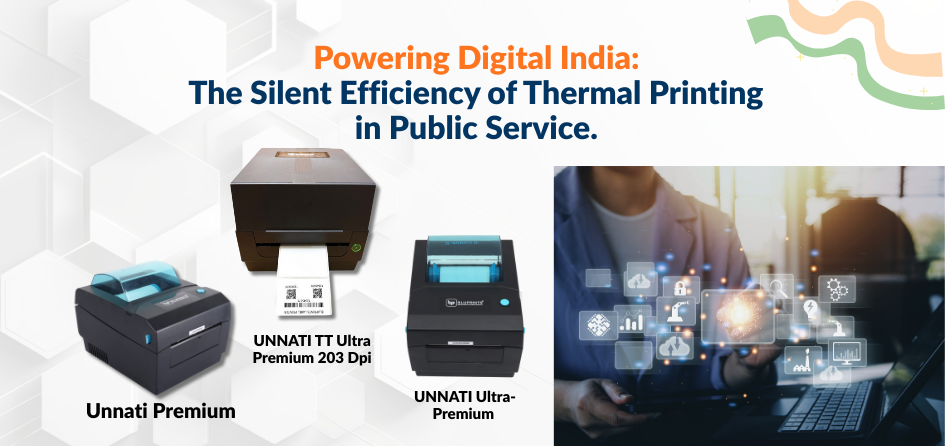
India’s rapid shift toward digitization and process automation has significantly increased the need for fast, accurate, and reliable printing solutions. Across government departments, healthcare institutions, logistics networks, and industrial operations, thermal label printers have become an essential operational tool. These printers are no longer limited to warehouses or retail stores—they now play a crucial role in public service delivery, patient safety, compliance, and large-scale data tracking.
This blog explores how thermal label printers in India are transforming high-volume environments, improving efficiency, and enabling better traceability across government, healthcare, and industrial sectors.
Understanding Thermal Label Printing Technology
Thermal label printers use heat to print text, barcodes, and QR codes onto specially coated thermal labels. Unlike traditional ink or laser printers, they do not rely on ink cartridges, toner, or ribbons (in direct thermal printing). This makes them faster, cleaner, and more reliable for continuous operations.
Because of their low maintenance, high speed, and consistent print quality, thermal label printers are widely adopted in environments where accuracy and uptime are critical.
Why Government Departments in India Prefer Thermal Label Printers
Government departments deal with massive volumes of data, documents, and physical assets every day. From postal services to citizen service centers, thermal label printers help streamline workflows and reduce manual errors.
High-Volume Printing with Consistency
Government operations often require thousands of labels daily—for parcels, files, samples, receipts, or identification tags. Thermal label printers are built for continuous printing without performance degradation, making them ideal for such workloads.
Barcode and QR Code Accuracy
Public sector systems increasingly rely on barcodes and QR codes for tracking and verification. Thermal printers produce sharp, scannable labels that ensure:
- Accurate parcel tracking
- Secure document identification
- Faster verification at service counters
This improves transparency and accountability in government processes.
Postal Services and Logistics
In postal departments, thermal label printers are used to print:
- Consignment labels
- Tracking barcodes
- Routing information
- Return and delivery status labels
Clear and durable labels ensure parcels are tracked accurately throughout the delivery network.
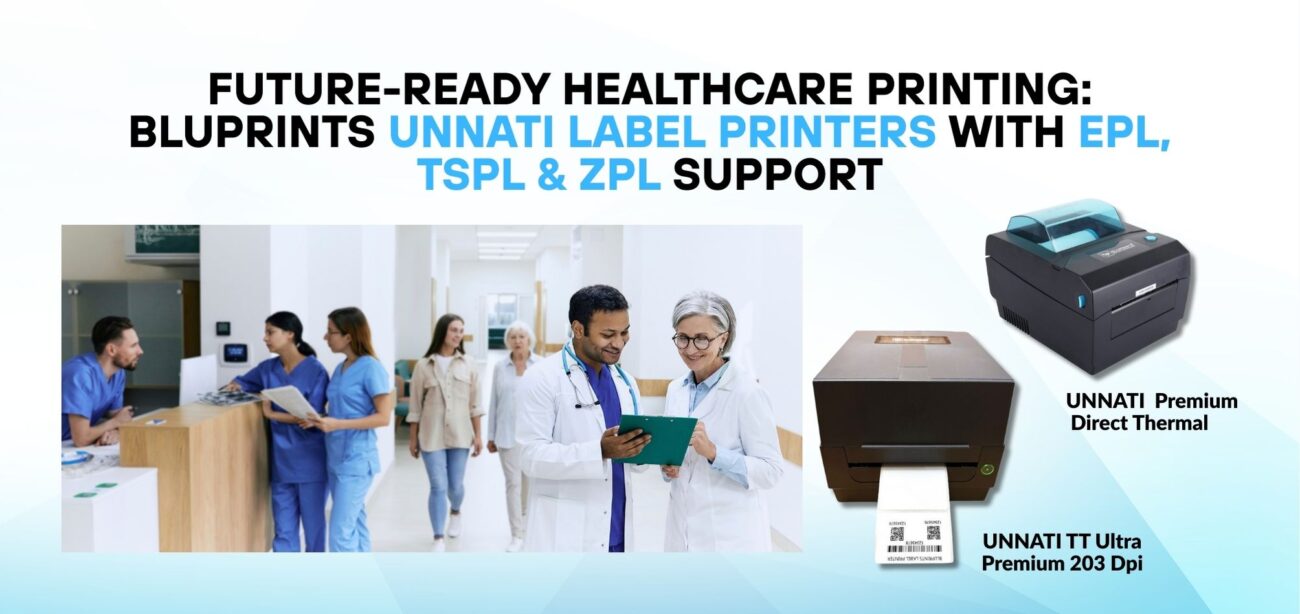
Role of Thermal Label Printers in Healthcare and Pharmaceuticals
Healthcare environments demand precision, hygiene, and reliability. Even a small labeling mistake might have major repercussions. Thermal label printers help hospitals and pharmaceutical facilities maintain accuracy at every stage.
Patient Identification and Safety
Hospitals use thermal label printers to generate:
- Patient wristband labels
- Admission and discharge labels
- Bed and file identification tags
These labels help prevent misidentification and improve patient safety.
Laboratory Sample Management
In labs and diagnostic centers, thermal labels are used for:
- Blood and urine sample labeling
- Test tube barcodes
- Pathology reports
High-resolution barcode printing ensures samples are correctly matched to patients, reducing diagnostic errors.
Medication and Pharmacy Labeling
Pharmaceutical and hospital pharmacies rely on thermal label printers to print:
- Medicine labels
- Dosage instructions
- Batch and expiry details
Thermal labels remain legible and intact even with frequent handling.
Laundry and Linen Management: A Growing Use Case
One of the fastest-growing applications of thermal label printers is laundry and linen management, especially in hospitals, hotels, and industrial facilities.
Durable Labels for Harsh Conditions
Laundry operations require labels that can withstand:
- Heat
- Moisture
- Repeated washing
- Chemical exposure
Thermal labels designed for durability ensure barcodes remain readable throughout the garment lifecycle.
Automated Tracking and Status Updates
By scanning barcode or QR labels, laundry systems can automatically update status stages such as:
- Received
- Washed
- Pressed
- Ready
- Delivered
This reduces manual tracking, improves turnaround time, and minimizes loss or mix-ups.
E-Commerce and Retail: Managing Scale with Speed
The growth of online shopping and organized retail has increased the demand for fast and accurate labeling.
Shipping and Return Labels
Thermal label printers are widely used to print:
- Shipping labels
- Return barcodes
- Order identification stickers
Clear labels ensure smooth logistics and fewer delivery errors.
Retail Shelf and Price Labels
Retail chains use thermal printers for:
- Price tags
- Promotional labels
- Seasonal offers
- Shelf identification
This allows rapid updates without relying on pre-printed materials.
Warehouse and Inventory Operations
Warehouses and distribution centers operate on speed and accuracy. Thermal label printers are essential for:
- Inventory labeling
- Pallet identification
- Bin and rack labeling
- Batch tracking
Accurate barcode printing improves inventory visibility and reduces picking and dispatch errors.
Manufacturing and Compliance Labeling
Manufacturing units must comply with strict labeling standards related to safety, traceability, and quality control.
Thermal label printers are used for:
- Product identification tags
- Serial number labels
- Compliance and regulatory labels
- Packaging labels
Consistent label quality ensures smooth audits and supply chain traceability.
Advantages of Thermal Label Printers for High-Volume Industries
Low Maintenance and Operational Cost
Thermal printers do not require ink or toner, significantly reducing running costs. This makes them ideal for large-scale, budget-conscious operations.
Speed and Productivity
High print speeds enable faster processing, especially in environments with continuous label requirements.
Compact and Durable Design
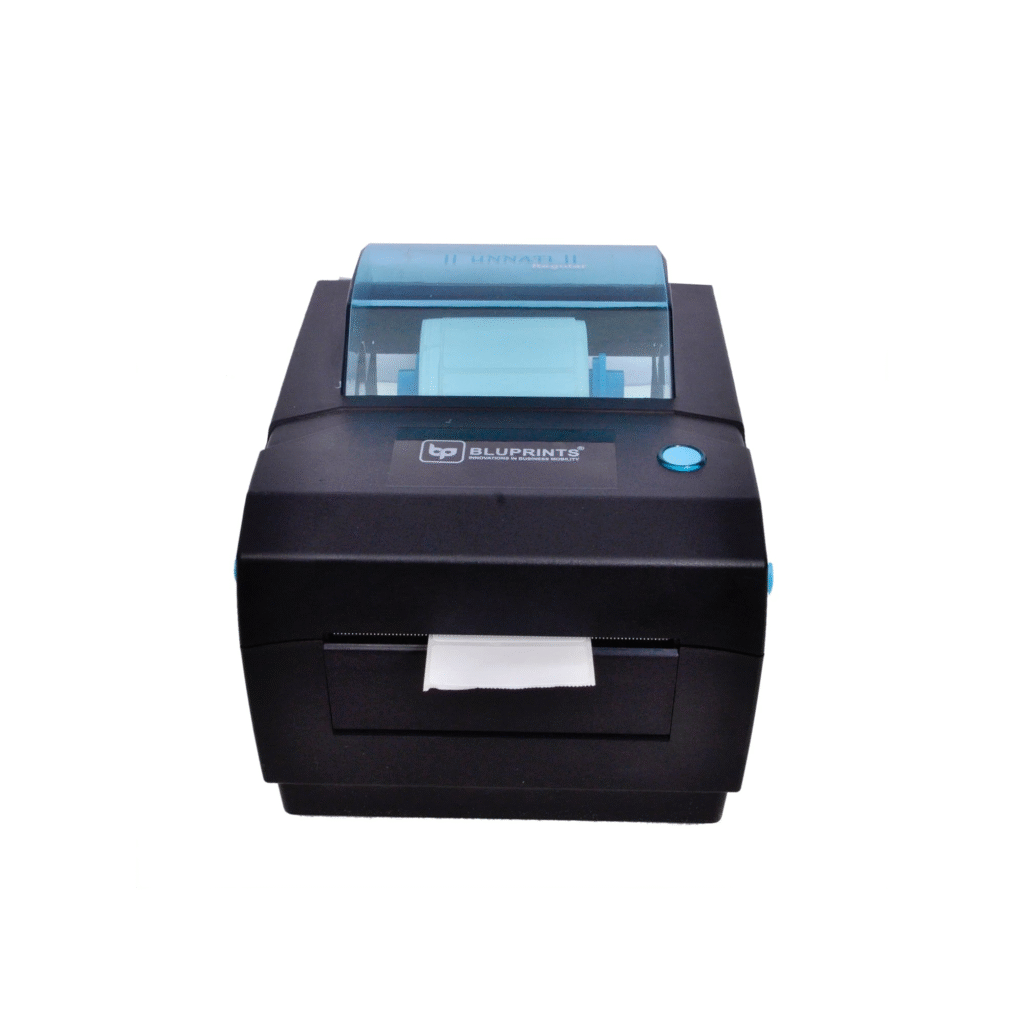
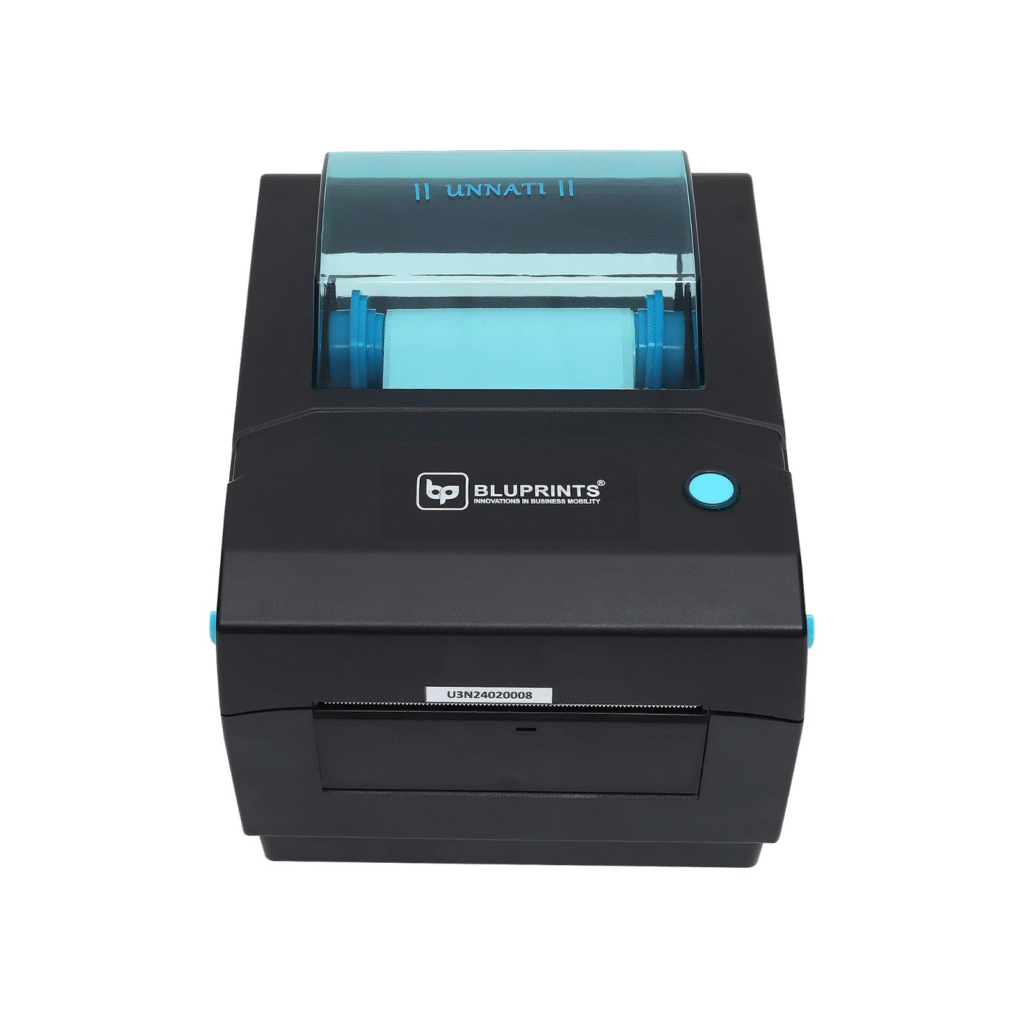
Most desktop thermal printers in India are designed to fit easily into workstations while being rugged enough for industrial use.
Reliability in Demanding Environments
Thermal label printers perform consistently even in dusty, humid, or high-traffic settings.
Supporting India’s Digital and Traceability Initiatives
With increasing emphasis on digital records, traceability, and automation, thermal label printers support:
- Digital inventory systems
- Real-time tracking platforms
- ERP and POS integrations
- QR-based verification processes
This aligns with India’s broader push toward efficient, technology-driven governance and industry operations.
Choosing the Right Thermal Label Printer
When selecting a thermal label printer, organizations should consider:
- Label width flexibility
- Print speed and resolution
- Barcode and QR compatibility
- Durability and build quality
- Ease of integration with existing systems
Choosing the right printer ensures long-term efficiency and scalability.
FAQs
Q1. What is a thermal label printer?
A thermal label printer uses heat to print text, barcodes, and QR codes on special labels without ink or toner.
Q2. Why are thermal label printers preferred in government departments?
They offer fast printing, low maintenance, accurate barcode output, and reliable performance for high-volume operations.
Q3. Are thermal labels durable?
Yes. When designed for industrial use, thermal labels can withstand handling, moisture, and environmental stress.
Q4. Can thermal label printers print QR codes?
Yes. They produce sharp, scannable QR codes suitable for tracking and verification systems.
Q5. Are thermal label printers suitable for healthcare?
Absolutely. They are widely used for patient identification, lab samples, and medication labeling.
Q6. Do thermal label printers require ink or toner?
No. Direct thermal printers work without ink, making them cost-effective and easy to maintain.
Conclusion
Thermal label printers have become a backbone technology for government departments, healthcare institutions, and high-volume industries across India. Their ability to deliver fast, accurate, and durable labels supports efficient workflows, improves traceability, and reduces operational errors. As public services and industrial operations continue to scale, the role of reliable thermal label printing will only grow stronger.
By adopting dependable thermal label printing solutions from BluPrints, organizations can ensure long-term efficiency, compliance, and seamless operations in demanding environments.